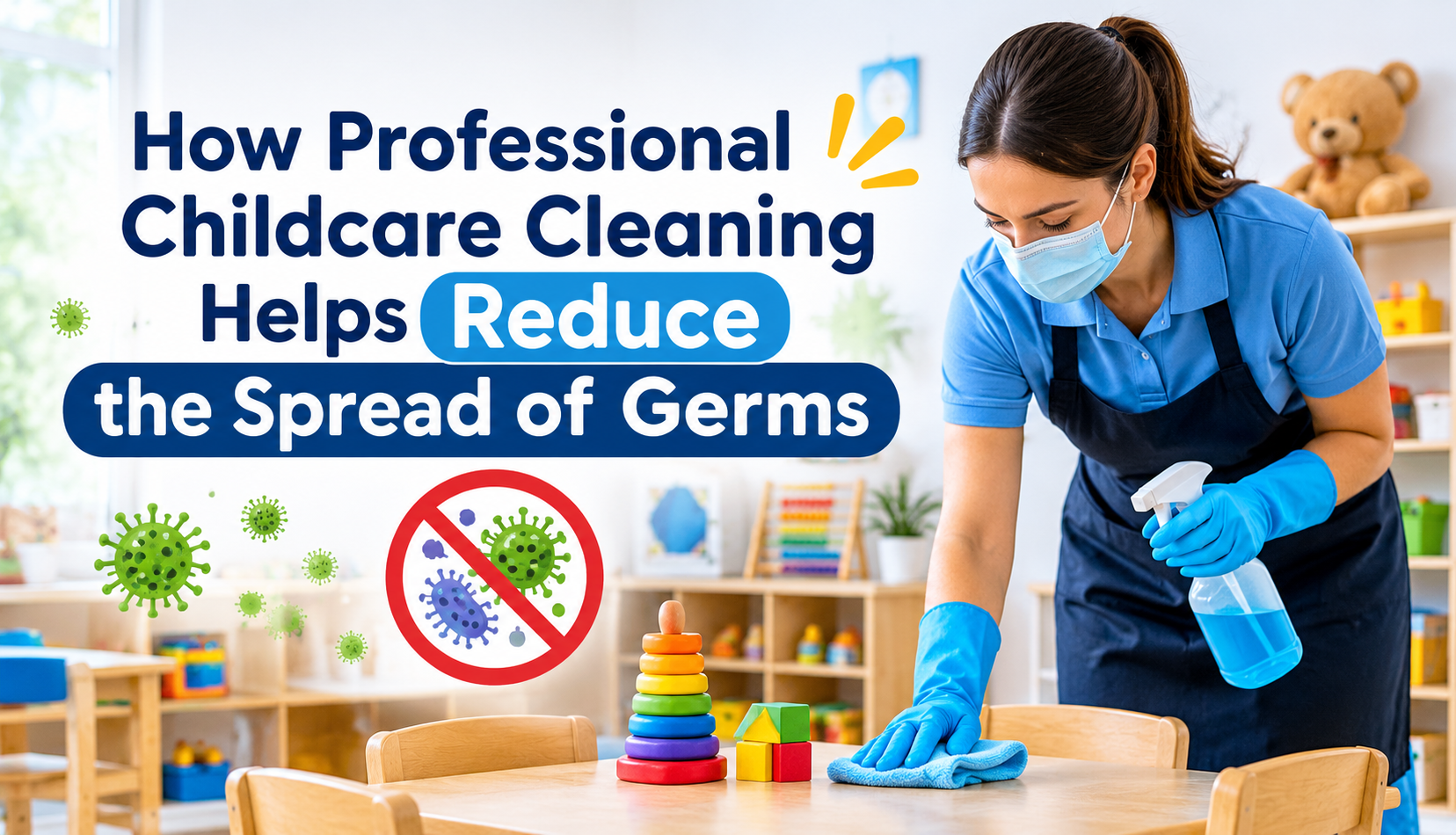
How Professional Childcare Cleaning Helps Reduce the Spread of Germs
Childcare centres are busy places where children learn, play, eat and spend time together. From shared toys and play equipment to tables, bathrooms and sleeping areas, many surfaces receive regular contact throughout the day. This can make it easier for germs to spread if staff do not follow proper cleaning and hygiene practices.
Young children often touch different surfaces, share toys and put their hands near their mouths. As a result, maintaining a clean childcare environment is important for protecting children, educators and visitors.
Professional cleaning plays an important role in reducing the spread of germs. Childcare disinfection services help clean frequently touched surfaces, sanitise shared spaces and support better hygiene throughout childcare facilities.
In this blog, we will explore how professional childcare cleaning helps reduce germs and why regular cleaning and disinfection matter.
Why Is Cleaning Important in Childcare Centres?
Childcare centres bring many children together in one place. Children share toys, books, furniture, play equipment and other everyday items. These shared spaces can collect dirt, germs and bacteria throughout the day.
Regular cleaning helps remove visible dirt, while appropriate disinfection helps reduce harmful microorganisms on suitable surfaces.
Here are some reasons why childcare cleaning matters:
- Protects children’s health: Good hygiene practices help reduce exposure to harmful germs.
- Supports staff wellbeing: Clean surroundings help create a healthier workplace for educators.
- Maintains hygiene: Regular cleaning keeps shared spaces sanitary.
- Reduces cross-contamination: Proper cleaning practices help limit the transfer of germs between surfaces.
- Creates a welcoming environment: Clean rooms and facilities make childcare centres more comfortable for everyone.
Professional childcare disinfection services can help centres maintain consistent hygiene standards across different areas of their facilities.
1. Reduces Germs on Frequently Touched Surfaces
Children and educators touch many surfaces throughout the day. Door handles, light switches, tables, chairs and cupboard handles can collect germs through regular contact.
If staff do not clean these surfaces properly, germs may transfer from one person to another.
Focus on High-Touch Areas
Professional cleaners pay attention to frequently touched surfaces during routine cleaning.
Common areas include:
- Door handles and entry points.
- Tables and chairs.
- Light switches.
- Cupboard handles.
- Handrails.
- Tap handles.
- Shared storage areas.
Cleaning these surfaces regularly helps remove dirt and reduce the spread of germs.
Use Suitable Disinfection Products
Cleaning and disinfection are not the same. Cleaning removes dirt and many germs from surfaces, while disinfection uses suitable products to kill or inactivate microorganisms.
Professional cleaners follow product instructions, including the correct dilution and contact time.
Using appropriate childcare disinfection services helps childcare centres maintain better hygiene across frequently used areas.
2. Keeps Shared Toys and Play Equipment Hygienic
Toys and play equipment are important parts of children’s daily activities. However, children often share toys, touch them with unwashed hands or put them in their mouths.
This makes regular toy cleaning an important part of childcare hygiene.
Clean Toys Regularly
Staff should clean toys according to their material, usage and the manufacturer’s instructions.
For example:
- Wash suitable plastic toys with warm water and detergent.
- Clean washable soft toys according to care instructions.
- Wipe play equipment using suitable cleaning products.
- Remove damaged toys that cannot be cleaned safely.
Toys that children put in their mouths should receive appropriate cleaning before another child uses them.
Pay Attention to Indoor Play Areas
Indoor play equipment, activity tables, building blocks and shared learning materials also need regular attention.
Professional cleaners can help maintain these areas through planned cleaning routines and appropriate disinfection methods.
3. Improves Bathroom and Toilet Hygiene
Bathrooms are among the most important areas to clean in childcare centres. Children use toilets, sinks and changing areas throughout the day, making these spaces more likely to collect germs.
Poor bathroom hygiene can increase the risk of contamination.
Clean Toilets and Washbasins Properly
Professional cleaners focus on important bathroom areas, including:
- Toilet seats and flush handles.
- Washbasins and taps.
- Bathroom door handles.
- Floors and surrounding surfaces.
- Soap dispensers.
- Changing areas.
These surfaces need regular cleaning and suitable disinfection.
Maintain Clean Changing Areas
Nappy-changing stations require careful attention because they can become contaminated during use.
Staff should follow the centre’s hygiene procedures, clean and disinfect changing surfaces between uses as required, and dispose of nappies safely.
Regular professional cleaning supports these daily hygiene practices.
4. Helps Maintain Cleaner Kitchens and Eating Areas
Children often eat snacks and meals together in childcare centres. Food spills, crumbs and dirty utensils can create unhygienic conditions if staff do not clean them promptly.
Kitchen and dining areas therefore need proper cleaning throughout the day.
Clean Tables and Food Preparation Surfaces
Tables, benches and food preparation areas should be cleaned using products suitable for their intended use.
Professional cleaners can help with:
- Cleaning dining tables and chairs.
- Removing food spills and crumbs.
- Cleaning kitchen floors.
- Wiping suitable cupboard surfaces.
- Cleaning sinks and taps.
- Maintaining general kitchen hygiene.
Food contact surfaces need appropriate cleaning and sanitising procedures.
Keep Floors Free from Food Waste
Food scraps and liquid spills can attract pests and create slippery surfaces.
Regular floor cleaning helps remove food waste and supports a safer dining environment.
5. Reduces Germ Build-Up in Sleeping and Rest Areas
Many childcare centres provide sleeping or resting spaces for young children. These areas need regular attention because children spend extended periods using mattresses, bedding and other shared facilities.
Clean Bedding and Rest Equipment
Sheets, blankets and other washable bedding should be changed and cleaned according to the centre’s hygiene procedures.
Mattresses, cots and other rest equipment should also receive appropriate cleaning between uses.
Maintain Good Air and Surface Hygiene
Dust can collect on shelves, furniture and other surfaces in sleeping rooms.
Regular dusting, floor cleaning and appropriate ventilation help maintain a more comfortable indoor environment.
Professional childcare disinfection services can support these cleaning routines by helping maintain hygienic sleeping and resting areas.
6. Supports a Healthier Environment During Illness Outbreaks
Childcare centres may experience periods when illnesses spread among children and staff. Common illnesses include colds, influenza and gastroenteritis.
During these periods, hygiene becomes especially important.
Increase Cleaning of Frequently Used Areas
When illness occurs, centres may need to review their cleaning schedules and increase attention to shared surfaces, toys, bathrooms and other high-contact areas.
Cleaning staff should follow appropriate procedures for the suspected infection and use suitable products.
Follow Proper Hand Hygiene Practices
Cleaning alone cannot prevent every infection. Children and educators should also wash their hands regularly.
Important times include:
- Before eating.
- After using the toilet.
- After outdoor play.
- After coughing or sneezing.
- After handling rubbish.
- Before preparing or serving food.
Combining good hand hygiene with professional childcare disinfection services helps support a cleaner childcare environment.
7. Why Choose Professional Childcare Cleaning Services?
Daily cleaning by childcare staff is important, but busy centres may also need professional cleaning support.
Professional cleaners understand how to follow cleaning schedules, use suitable products and pay attention to areas that need regular maintenance.
Some benefits include:
- Consistent cleaning: Planned schedules help maintain hygiene throughout the facility.
- Suitable products: Cleaners select products based on the surface and cleaning requirements.
- Attention to detail: Frequently overlooked areas receive proper attention.
- Time savings: Educators can focus more on children’s care and daily activities.
- Better hygiene management: Regular cleaning supports the centre’s existing hygiene procedures.
Professional childcare disinfection services can complement the daily cleaning routines followed by educators and childcare staff.
Book Professional Childcare Cleaning with Ajax Cleaning and Domestic Services
Maintaining a clean childcare centre requires regular attention to classrooms, bathrooms, kitchens, play areas and shared facilities.
Professional cleaning support can help reduce dirt, manage germs and create a more hygienic environment for children and educators.
If you are looking for professional child care cleaning solutions, Ajax Cleaning and Domestic Services can help you maintain cleaner childcare facilities through suitable cleaning and hygiene practices.
Get in touch to discuss your childcare cleaning requirements and arrange a cleaning plan that suits your facility.
Final Thoughts
A clean childcare environment plays an important role in supporting children’s health and everyday wellbeing. Regular cleaning, proper disinfection, good hand hygiene and responsible waste management all help reduce the spread of germs.
From shared toys and dining tables to bathrooms and sleeping areas, every part of a childcare centre needs suitable attention.
With professional support from Ajax Cleaning and Domestic Services, childcare facilities can take a more organised approach to cleanliness and hygiene. Making professional cleaning part of your regular maintenance routine helps create a cleaner and more comfortable space for children, educators and visitors.